Scientific Research Database

Research on the Transcendental Meditation and TM-Sidhi Programs
As taught by Maharishi Mahesh Yogi
677 papers · 1,773 findings · 200 journals · 1970–2024
44 papers found
- 2021· JACEP Open· EmpiricalAzizoddin, Desiree R.; Kvaternik, Noelia; Zhou, Guohai; Hasdianda, Mohammad Adrian; Johnsky, Lily; Im, Dana; Boyer, Edward W.; Beck, Meghan; Jones, Natasha; Chai, Peter R. (2021). Heal the Healers: A pilot study evaluating the feasibility, acceptability, and exploratory efficacy of a Transcendental Meditation intervention for emergency clinicians during the coronavirus disease 2019 pandemic. JACEP Open, 2(6), e12619.
Single-arm pilot study of a three-month Transcendental Meditation intervention for 32 emergency physicians, nurses and physician assistants at two urban hospitals during the COVID-19 pandemic, assessing feasibility, burnout and psychological health.
- Organizational Performance and Well-Being: Thirty-two emergency clinicians (physicians, nurses and physician assistants) at two urban hospitals learned Transcendental Meditation during the COVID-19 pandemic; 90.6% attended at least six of eight training sessions.
- Psychological Health: Participants showed significant reductions in burnout (Cohen's d = 0.43–0.45) and in symptoms of depression, anxiety, stress and sleep disturbance (d = 0.70–0.87) over three months.
- Organizational Performance and Well-Being: This was a single-arm pilot without a control group, so improvements cannot be attributed to TM alone.
- 2020· Revista de Ciências da Saúde· Empiricalde Oliveira, Daniel Vicentini; Bertolini, Sônia Maria Marques Gomes; Chatalov, Ellis Gilson; Franco, Maura Fernandes; de Lima, Maria do Carmo Correia; Freire, Gabriel Lucas Morais; de Oliveira, Rogéria Vicentini; Nascimento Júnior, José Roberto Andrade do (2020). Factors associated with transcendental meditation practice in older people. Revista de Ciências da Saúde, 10(3), 85–91.
Cross-sectional comparison of 113 older adults in Brazil—60 Transcendental Meditation practitioners and 53 non-practitioners—examining sociodemographic and health factors associated with the practice.
- Health—Aging: In a cross-sectional comparison of 113 older adults in Brazil, the 60 TM practitioners reported better self-perceived health than the 53 non-practitioners (91.7% vs 77.4% good or excellent).
- Health—General: Practitioners reported less hospitalization in the previous semester than non-practitioners (5% vs 24.5%).
- Health—Aging: Practitioners were younger and more educated on average, and the cross-sectional design cannot establish that TM caused the differences.
- 2020· Stress· EmpiricalKlimes-Dougan, Bonnie; Chong, Li Shen; Samikoglu, Ali; Thai, Michelle; Amatya, Palistha; Cullen, Kathryn R.; Lim, Kelvin O. (2020). Transcendental meditation and hypothalamic-pituitary-adrenal axis functioning: A pilot, randomized controlled trial with young adults. Stress, 23(1), 105–115.
Pilot randomized controlled trial of 34 young adults assigned to eight weeks of Transcendental Meditation training or a wait-list control, examining hypothalamic-pituitary-adrenal (HPA) axis functioning.
- Biochemical: Thirty-four young adults were randomized to eight weeks of Transcendental Meditation training or a wait-list control in this pilot trial.
- Biochemical: Results suggest TM may help regulate hypothalamic-pituitary-adrenal axis functioning, with changes extending beyond the practice period itself.
- Response to Stress: The authors note the small pilot sample limits generalization and call for replication in larger randomized trials.
- 2020· Heliyon· EmpiricalMovahed, Ali Heydari; Sabouhi, Fakhri; Mohammadpourhodki, Reza; Mahdavi, Sepideh; Goudarzian, Sima; Amerian, Malihe; Mohtashami, Mona; Kheiri, Mansoure; Imeni, Malihe (2020). Investigating the effect of transcendental meditation on spiritual wellbeing of Type-2 diabetic amputees: A clinical trial study. Heliyon, 6(12), e05567.
Clinical trial randomizing 54 Type-2 diabetic amputees to three Transcendental Meditation sessions or a control condition, measuring spiritual well-being before and after. Post-intervention scores did not favor the TM group.
- Psychological Health: Fifty-four Type-2 diabetic amputees were randomized to three Transcendental Meditation sessions or a control condition, with spiritual well-being measured before and after.
- Psychological Health: Post-intervention spiritual well-being scores were lower in the TM group than in the control group (88.40 vs 97.82), so the study does not show a TM benefit.
- Health—General: The intervention was limited to three instructional sessions, much briefer than standard TM training, which limits comparability with other trials.
- 2020· Brain and Cognition· EmpiricalAvvenuti, Giulia; Leo, Andrea; Cecchetti, Luca; Franco, Maria Fatima; Travis, Frederick; Caramella, Davide; Bernardi, Giulio; Ricciardi, Emiliano; Pietrini, Pietro (2020). Reductions in perceived stress following Transcendental Meditation practice are associated with increased brain regional connectivity at rest. Brain and Cognition, 139, 105517.
Three-month study of 19 TM participants and 15 controls associated reduced stress/anxiety with changes in resting-state functional brain connectivity. The small preliminary sample does not establish a causal mechanism.
- Psychological Health: TM participants showed reduced perceived stress and anxiety after three months.
- Electrophysiological: Stress/anxiety changes were associated with functional connectivity changes involving default-mode regions; connectivity with the insula also increased.
- Electrophysiological: No structural brain changes were observed in either group.
- 2017· Consciousness and Cognition· EmpiricalTravis, Frederick; Parim, Niyazi; Shrivastava, Amrita (2017). Higher theta and alpha1 coherence when listening to Vedic recitation compared to coherence during Transcendental Meditation practice. Consciousness and Cognition, 49, 157–162.
Within-person comparison of subjective experiences and EEG in 37 subjects listening to live Vedic recitation and practicing TM.
- During the Practice—Electroencephalographic: Vedic recitation produced higher theta2 and alpha1 coherence in frontal, parietal and frontal-parietal measurements than TM in this comparison.
- During the Practice—Electroencephalographic: Participants described recitation as a deeper, more inward experience; the study measured immediate experience and EEG, not clinical benefit.
- 2017· Brain and Cognition· EmpiricalTravis, Frederick; Parim, Niyazi (2017). Default mode network activation and Transcendental Meditation practice: Focused Attention or Automatic Self-transcending?. Brain and Cognition, 111, 86–94.
EEG source analysis and subjective reports from 87 practitioners with one month to five years of TM experience, comparing TM, eyes-closed rest and a task.
- During the Practice—Electroencephalographic: Rest and TM showed theta/alpha activation in default-mode-network regions, while the task activated central-executive-network regions.
- During the Practice—Electroencephalographic: Reported transcending did not increase with years of practice; the authors argue against classifying TM as focused-attention meditation.
- 2017· Cognitive Processing· EmpiricalFaber, Pascal L.; Travis, Frederick; Milz, Patricia; Parim, Niyazi (2017). EEG Microstates During Different Phases of Transcendental Meditation Practice. Cognitive Processing, 18(3), 307–314.
Within-person EEG comparison of 20 TM practitioners during transcending, undirected mentation during TM, and task-free eyes-closed rest. Examines microstate duration, coverage, and occurrence; it does not test clinical outcomes.
- During the Practice—Electroencephalographic: Transcending and resting showed lower Class A and higher Class D microstate coverage and occurrence than undirected mentation.
- During the Practice—Electroencephalographic: Transcending showed lower Class C coverage and occurrence than undirected mentation.
- During the Practice—Electroencephalographic: Transcending did not significantly differ from task-free resting in the measured microstate parameters; Class B parameters did not differ across conditions.
- 2015· Personality and Individual Differences· EmpiricalSchötz, Eva; Otten, Simone; Wittmann, Marc; Schmidt, Stefan; Kohls, Niko; Meissner, Karin (2015). Time perception, mindfulness and attentional capacities in transcendental meditators and matched controls. Personality and Individual Differences, 93, 16–21.
Matched cross-sectional comparison of 20 experienced TM practitioners and 20 controls. Online publication was in 2015; final volume and pagination are from the 2016 issue. Group differences cannot establish training effects.
- Perceptual Acuity: TM practitioners performed more consistently in multisecond duration reproduction and more accurately in minute estimation and duration discrimination.
- Self Development: Practitioners reported higher mindfulness than matched nonmeditating controls.
- Cognitive Performance: Attentional capacities measured by the Attention Network Test did not differ between groups.
- 2015· PLOS ONE· EmpiricalDuraimani, Shanthi; Schneider, Robert H.; Randall, Otelio S.; Nidich, Sanford I.; Xu, Shichen; Ketete, Muluemebet; Rainforth, Maxwell A.; Gaylord-King, Carolyn; Salerno, John W.; Fagan, John (2015). Effects of Lifestyle Modification on Telomerase Gene Expression in Hypertensive Patients: A Pilot Trial of Stress Reduction and Health Education Programs in African Americans. PLOS ONE, 10(11), e0142689.
Sixteen-week volunteer substudy of 48 participants from a randomized trial comparing TM plus basic health education with extensive health education in African Americans with hypertension. No significant between-group advantage was found for telomerase gene expression or systolic blood pressure.
- Biochemical: Telomerase gene-expression changes did not differ significantly between groups; the TM-group hTERT change did not reach conventional significance (p = .055).
- Health—Cardiovascular: Systolic blood pressure fell within the TM group, but the between-group difference was not significant; diastolic blood pressure favored extensive health education (p = .04).
- Health Promoting Behavior: Both stress reduction and health education were evaluated as lifestyle approaches; the small volunteer substudy does not establish telomere lengthening.
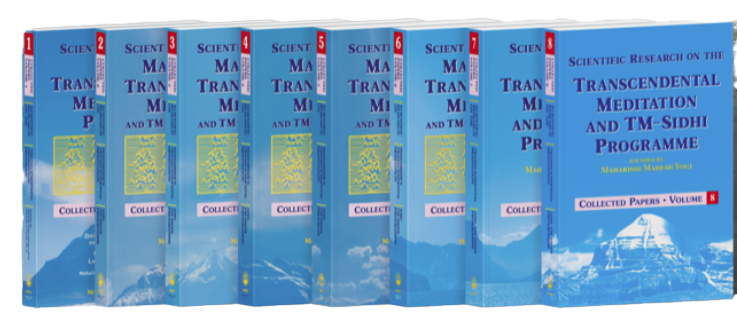
- 2011· Empirical· Collected Papers Vol. 6Belham, M. F. C. Introducing in a military academy the Transcendental Meditation program for prevention of stress. Centre for Personnel Studies, Department of Teaching and Research, Ministry of the Army, Rio de Janeiro, Brazil.
This study found that military cadets who learned the Transcendental Meditation program showed increased capacity of attention, improved memory of details, increased effectiveness in executing orders, improved emotional functioning, increased physical strength, and reduced resting heart rate. In addition, military officers at the academy who learned the Transcendental Meditation program displayed increased concentration of attention, improved memory of details, and improved emotional performance.
- Cognitive Performance: Increased Capacity of Attention among Military Cadets
- Learning and Memory: Improved Memory of Details among Military Cadets
- Organizational Performance and Well-Being: Increased Effectiveness in Executing Orders among Military Cadets
- + 6 more findings
- 2011· Empirical· Collected Papers Vol. 6Istratov, E. N.; and Lyubimov, S. N. Comparative analysis of alpha rhythm content in spontaneous EEG activity among subjects practising the Transcendental Meditation technique. Brain Research Institute, Russian Academy of Medical Sciences, Moscow.
The practice of the Transcendental Meditation technique was found to increase restful alertness, as reflected in high frontal EEG alpha power during the practice of Transcendental Meditation, and stabilization of frontal EEG alpha power outside the practice of Transcendental Meditation.
- Electroencephalographic: Stabilization of Frontal EEG Alpha Power Outside the Practice of the Transcendental Meditation technique
- During the Practice—Brain Activity: High Frontal EEG Alpha Power During the Transcendental Meditation technique
- 2002· Australian Family Physician· Research Review· Collected Papers Vol. 7King, Michael S.: Carr, Tim; and D’cruz, Cathryn. Transcendental Meditation, hypertension and heart disease. Australian Family Physician 31: 164–168, 2002.
The authors review research on the effects of the Transcendental Meditation technique in the treatment and prevention of coronary heart disease.
- Review Paper—Health: Research Review—Prevention and Treatment of Coronary Heart Disease
- 2001· Intelligence· Empirical· Collected Papers Vol. 7So, K.-T.; and Orme-Johnson, D. W. Three randomized experiments on the longitudinal effects of the Transcendental Meditation technique on cognition. Intelligence 29: 419–440, 2001.
Three longitudinal studies of six to 12 months duration among secondary students in Taiwan found that the Transcendental Meditation program promoted comprehensive development on five cognitive variables and also reduced anxiety, in contrast to napping, contemplation meditation, or no treatment.
- Cognitive Performance: Increased Creativity
- Cognitive Performance: Increased Field Independence
- Cognitive Performance: Increased Practical Intelligence
- + 5 more findings
- 1999· Human Physiology· Empirical· Collected Papers Vol. 7Lyubimov, Nicolai N. Changes in electroencephalogram and evoked potentials during application of the specific form of physiological training (meditation). Human Physiology 25: 171–180, 1999. Translated from Fiziologiya Cheloveka 25: 56–66, 1999.
This study measured characteristics of somatosensory evoked potentials following median nerve stimulation as well as EEG spectral power among participants in the Transcendental Meditation program. The Transcendental Meditation technique was characterized by increased silence in cortical functioning, as reflected in increased alpha and theta power and reduction of late SEP components. There were also specific types of cortical activation, reflected in increased activation of beta power and widening of projections of early (sensory) SEP components due to increased functional mobilization. The author concludes that the Transcendental Meditation technique not only provides deep rest but also prepares the central nervous system for keener sensory functioning.
- During the Practice—Brain Activity: Mobilization of Hidden Reserves of the Brain: Wider Distribution of Cortical Response to Somatosensory Stimuli
- During the Practice—Brain Activity: Increased EEG Spectral Power in Theta, Alpha, and Beta Frequencies
- 1997· Theoretical/Review· Collected Papers Vol. 7Orme-Johnson, David W.; Zimmerman, Eva; and Hawkins, Mark. Maharishi’s Vedic psychology: The science of the cosmic psyche. In Asian Perspectives on Psychology, eds. H. S. R. Kao and D. Sinha, pp. 282–308. New Delhi/Thousand Oaks/London: Sage Publications, 1997.
The authors present fundamental theoretical principles of a complete system of psychology based on Maharishi’s Vedic Science and the most recent developments of modern science, and review research on the Transcendental Meditation program supporting the principles of this system in terms of the holistic development of individual life and society.
- Review Paper—Psychology: Theoretical and Review Paper—Fulfillment of Psychology
- 1996· Bulletin of Experimental Biology and Medicine· Empirical· Collected Papers Vol. 6Istratov, E. N.; Lyubimov, N. N.; and Orlova, T. V. The dynamic features of modified states of consciousness during Transcendental Meditation. [See also Byulleten’ Eksperimental’noi Biologii i Meditsiny 121: 128–130, 1996, translated and reprinted in Bulletin of Experimental Biology and Medicine 121: 117–119, 1996.]
This study found electroencephalographic indications of increased restful alertness during and after the practice of the Transcendental Meditation technique, as measured by increased stability of alpha activity, increased beta power, and reduced slow-wave delta and theta power during the practice of Transcendental Meditation, and the persistence of these EEG spectral distribution changes immediately after the practice.
- Electroencephalographic: Persistence of EEG Changes Following the Transcendental Meditation technique
- During the Practice—Brain Activity: Increased Stability of Alpha Activity, Increased Beta Power, and Reduced Slow-Wave Delta and Theta Power During the Transcendental Meditation technique
- 1995· Psychological Reports· Empirical· Collected Papers Vol. 6Assimakis, P. D., and Dillbeck, M. C. Time series analysis of improved quality of life in Canada: Social change, collective consciousness, and the TM-Sidhi program. Psychological Reports 76: 1171–1193, 1995.
The two studies reported in this paper found improved quality of national life in Canada during periods when the size of a group of participants in the Transcendental Meditation Sidhi program in the USA exceeded the square root of one per cent of the combined national populations of the USA and Canada. The first study found significant improvement in a weekly index measured by the sum of motor vehicle fatalities, homicides, and suicides; the second study documented significant improvement in a monthly index that combined the variables of motor vehicle fatalities, homicide, suicide, cigarette consumption, and work days lost in strikes.
- Sociological—Improved Quality of Life: Improvements on a Weekly Index Including Motor Vehicle Fatalities, Homicide, and Suicide (Canada, 1983–1985)
- Sociological—Improved Quality of Life: Improvements on a Monthly Index Including Motor Vehicle Fatalities, Homicide, Suicide, Cigarette Consumption, and Worker-Days Lost in Strikes (Canada, 1972–1986)
- 1995· Empirical· Collected Papers Vol. 6So, Kam-Tim. Testing and developing holistic intelligence in Chinese Culture with Maharishi’s Vedic Psychology: Three experimental replications using Transcendental Meditation. Dissertation Abstracts International 56(6): 2178A, 1995.
Combined results of three random assignment studies conducted with students at secondary or vocational training schools in Taiwan found that those who learned the Transcendental Meditation program showed significant improvement in comparison to control groups on six cognitive measures: increased creativity, increased fluid intelligence, decreased inspection time (increased speed of information processing), increased field independence, increased constructive thinking, and decreased anxiety.
- Cognitive Performance: Increased Creativity
- Cognitive Performance: Increased Fluid Intelligence
- Cognitive Performance: Decreased Inspection Time (Increased Speed of Information Processing)
- + 3 more findings
- 1993· Bulletin of Experimental Biology and Medicine· Empirical· Collected Papers Vol. 6Orlova, T. V.; Petrenko, E. V.; and Lyubimov, N. N. Cerebral control of afferent somatosensory projections. Presented at the International Symposium of Macro and Microlevels of Brain Organization in the Norm and Pathology, Moscow, 1992. [See also Byulleten’ Eksperimental’noi Biologii i Meditsiny 116: 229–231, 1993, translated and reprinted in Bulletin of Experimental Biology and Medicine 116: 1046–1048, 1993.]
This study reports increased amplitude of cortical and brain stem responses to somatosensory stimuli during the Transcendental Meditation technique in comparison to the control period prior to practice.
- During the Practice—Brain Activity: Increased Amplitude of Early Cortical and Brain Stem Responses to Somatosensory Stimuli