Scientific Research Database

Research on the Transcendental Meditation and TM-Sidhi Programs
As founded by Maharishi Mahesh Yogi
677 papers · 1,773 findings · 200 journals · 1970–2024
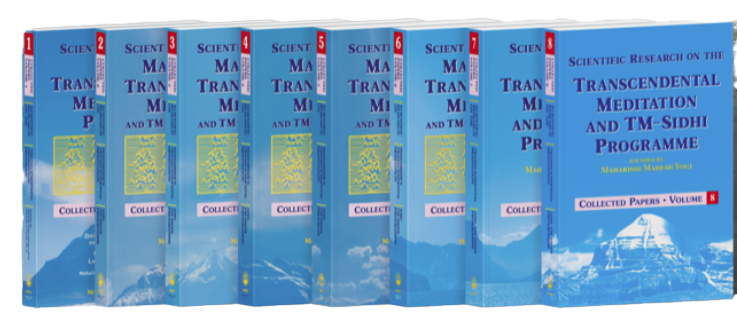
24 papers found
- 1995· Medical Hypotheses· Theoretical/Review· Collected Papers Vol. 6Elias, A. N.; and Wilson, A. F. serum hormonal concentrations following Transcendental Meditation—potential role of gamma aminobutyric acid. Medical Hypotheses 44: 287–291, 1995.
The authors review research on the hormonal changes associated with the Transcendental Meditation technique and attempt to explain these changes in light of the known effects of the neurotransmitter gamma aminobutyric acid (GABA) on hormonal secretion and release, proposing that one of the mechanisms by which the Transcendental Meditation technique produces relaxation is by enhancing the effects of an endogenous neurotransmitter.
- Review Paper—Physiology: Theoretical Paper—Physiology
- 1989· Empirical· Collected Papers Vol. 3O’Halloran, J. P.; Jevning, R. A.; Wilson, A. F.; Skowsky, R.; and Alexander, C. N. Behaviorally induced secretion of arginine vasopressin. Departments of Medicine and Physiology, University of California at Irvine, Orange, California, USA; Department of Endocrinology, Long Beach Veteran’s Administration Hospital, Long Beach, California, USA; and Department of Psychology and Social Relations, Harvard University, Cambridge, Massachusetts, USA, 1983.
Plasma vasopressin levels were found to be elevated before, during, and after the practice of Transcendental Meditation compared to levels at other times of the day, and to levels in nonmeditating controls who rested. This effect was not due to the usual mechanisms responsible for vasopressin release, and may be of importance in mediating the benefits of Transcendental Meditation for learning, memory, and behavior. The meditators were also found to have lower state and trait anxiety scores before and after Transcendental Meditation, compared to the controls. Furthermore, galvanic skin resistance increased more markedly during Transcendental Meditation than relaxation.
- Biochemical: Increased Plasma Vasopressin (and Normal Plasma Osmolality) at Times of Regular Twice Daily Practice of the Transcendental Meditation Technique
- Psychological Health: Lower State and Trait Anxiety
- During the Practice—Electrophysiological: Increased Basal Skin Resistance
- 1989· Empirical· Collected Papers Vol. 3Jevning, R.; Wilson, A. F.; and Pirkle, H. C. Behavioral control of red blood cell metabolism. Departments of Medicine, Physiology, and Pathology, University of California at Irvine, Orange, California, USA, 1981.
Red blood cells taken from subjects during Transcendental Meditation were found to show a decrease in lactate production compared to red cells taken during a control period. This finding indicates a marked reduction in red cell glucose metabolism during Transcendental Meditation which is not observed in other physiological states and which is apparently mediated by a unique mechanism.
- During the Practice—Biochemical: Reduced Glucose Metabolism in Red Blood Cells
- During the Practice—Respiratory/Metabolic: Normal Arterial Oxygen and Carbon Dioxide Partial Pressures
- During the Practice—Biochemical: Decreased Arterial Lactate
- 1989· Empirical· Collected Papers Vol. 2Jevning, R.; and Wilson, A. F. Acute decline in adrenocortical activity during Transcendental Meditation. Department of Medicine, University of California at Irvine, Orange, California, USA, 1977.
The practice of the Transcendental Meditation technique was associated with an acute decline in adrenocortical activity. Since increased adrenocortical hormone levels are well established correlates of both acute and chronic stress, the decline seen to result from the practice of Transcendental Meditation has important implications for counteracting stress.
- During the Practice—Biochemical: Decreased Plasma Cortisol
- 1987· Physiology & Behavior· Empirical· Collected Papers Vol. 5Jevning, R.; Wells, I.; Wilson, A. F.; and Guich, S. Plasma thyroid hormones, thyroid stimulating hormone, and insulin during acute hypometabolic states in man. Physiology & Behavior 40: 603–606, 1987.
Transcendental Meditation practice was found to have both short- and long-term effects on thyroid function, suggesting more efficient neuroendocrine regulation.
- Biochemical: Lower Baseline TSH Levels among Long-Term Participants in the Transcendental Meditation program
- During the Practice—Biochemical: Reduction of Pituitary Hormone TSH with Maintenance of Thyroid Hormones and Insulin Levels
- During the Practice—Electrophysiological: Increased Galvanic Skin Resistance
- 1987· Physiology & Behavior· Empirical· Collected Papers Vol. 5Wilson, A. F.; Jevning, R.; and Guich, S. Marked reduction of forearm carbon dioxide production during states of decreased metabolism. Physiology & Behavior 41: 347–352, 1987.
The study showed a unique change in forearm metabolism during the Transcendental Meditation technique, indicating deep relaxation.
- During the Practice—Respiratory/Metabolic: Reduced Difference between Arterial and Venous Carbon Dioxide Content in Forearm Metabolism
- 1985· Physiology & Behavior· Empirical· Collected Papers Vol. 5O’Halloran, J. P.; Jevning, R.; Wilson, A. F.; Skowsky, R.; Walsh, R. N.; and Alexander, C. N. Hormonal control in a state of decreased activation: Potentiation of arginine vasopressin secretion. Physiology & Behavior 35: 591–595, 1985.
During the practice of the Transcendental Meditation technique, there was a dramatic; increase in a hormone associated with body fluid balance as well as with learning and memory.
- Biochemical: Higher Baseline Plasma Level of Arginine Vasopressin, Associated with Body Fluid Balance and with Learning and Memory
- Psychological Health: Lower Levels of State and Trait Anxiety
- During the Practice—Biochemical: Increased Plasma Level of Arginine Vasopressin, Associated with Body Fluid Balance and with Learning and Memory
- + 1 more findings
- 1985· Physiology & Behavior· Empirical· Collected Papers Vol. 5Jevning, R.; Wilson, A. F.; Pirkle, H.; Guich, S.; and Walsh, R. N. Modulation of red cell metabolism by states of decreased activation: Comparison between states. Physiology & Behavior 35: 679–682, 1985.
This study showed lower aerobic lactate generation on the cellular level during the practice of the Transcendental Meditation technique.
- During the Practice—Biochemical: Marked Decline of Red Cell Metabolism in Comparison to Eyes-Closed Rest
- During the Practice—Electrophysiological: Increased Galvanic Skin Resistance during the Transcendental Meditation Technique
- 1983· American Journal of Physiology (Cell Physiol.)· Empirical· Collected Papers Vol. 4Jevning, R.; Wilson, A. F.; Pirkle, H.; O’Halloran, J. P.; and Walsh, R. N. Metabolic control in a state of decreased activation: Modulation of red cell metabolism. American Journal of Physiology 245 (Cell Physiol. 14): C457–C461, 1983.
Red blood cells taken from subjects during Transcendental Meditation were found to show a decrease in lactate production compared to red cells taken during a control period. This finding indicates a marked reduction in red cell glucose metabolism during Transcendental Meditation which is not observed in other physiological states and which is apparently mediated by a unique mechanism.
- During the Practice—Biochemical: Reduced Glucose Metabolism in Red Blood Cells
- During the Practice—Respiratory/Metabolic: Normal Arterial Oxygen and Carbon Dioxide Partial Pressures
- During the Practice—Biochemical: Decreased Arterial Lactate
- + 1 more findings
- 1983· American Journal of Physiology (Regulatory Integrative Comp. Physiol.)· Empirical· Collected Papers Vol. 4Jevning, R.; Wilson, A. F.; O’Halloran, J. P.; and Walsh, R. N. Forearm blood flow and metabolism during stylized and unstylized states of decreased activation. American Journal of Physiology 245 (Regulatory Integrative Comp. Physiol. 14): R110– R116, 1983.
Forearm oxygen consumption declined markedly during Transcendental Meditation due to a decreased rate of tissue oxygen extraction. These findings indicate reduced metabolism in muscle tissue and reflect a unique state of deep rest.
- During the Practice—Respiratory/Metabolic: Decreased Oxygen Consumption in Muscle Tissue
- During the Practice—Respiratory/Metabolic: Normal Arterial Oxygen Partial Pressure
- During the Practice—Biochemical: Decreased Arterial and Venous Lactate
- 1982· Physiology & Behavior· Empirical· Collected Papers Vol. 3Jevning, R.; Wilson, A. F.; and O’Halloran, J. P. Muscle and skin blood flow and metabolism during states of decreased activation. Physiology & Behavior 29(2): 343–348, 1982.
Forearm oxygen consumption declined markedly during Transcendental Meditation due to a decreased rate of tissue oxygen extraction. These findings indicate reduced metabolism in muscle tissue and reflect a unique state of deep rest.
- During the Practice—Respiratory/Metabolic: Decreased Oxygen Consumption in Muscle Tissue
- During the Practice—Respiratory/Metabolic: Normal Arterial Oxygen Partial Pressure
- During the Practice—Biochemical: Decreased Arterial and Venous Lactate
- 1978· The Physiologist· Empirical· Collected Papers Vol. 3Jevning, R.; and Wilson, A. F. Behavioral increase of cerebral blood flow. The Physiologist 21: 60 (abstract), 1978.
A large increase in cerebral blood flow was found during the practice of the Transcendental Meditation technique.
- During the Practice—Cardiovascular: Increase in Blood Flow to the Brain
- 1978· American Journal of Physiology· Empirical· Collected Papers Vol. 3Jevning, R.; Wilson, A. F.; Smith, W. R.; and Morton, M. E. Redistribution of blood flow in acute hypometabolic behavior. American Journal of Physiology 235(1): R89–R92, 1978.
During the practice of the Transcendental Meditation technique, hepatic and renal blood flow were found to decrease, while cardiac output increased, suggesting that a large increase of cerebral blood flow occurs during Transcendental Meditation.
- During the Practice—Cardiovascular: Changes in Regional Blood Flow and Cardiac Output Indicative of Increased Blood Flow to the Brain
- During the Practice—Biochemical: Decreased Arterial Lactate
- During the Practice—Respiratory/Metabolic: Decreased Respiratory Minute Volume
- 1978· Psychosomatic Medicine· Empirical· Collected Papers Vol. 3Jevning, R.; Wilson, A. F.; and Vanderlaan, E. F. Plasma prolactin and growth hormone during meditation. Psychosomatic Medicine 40(4): 329–333, 1978.
Plasma prolactin was found to increase in both short- and long-term practitioners of the Transcendental Meditation technique either towards the end or shortly after the practice.
- Biochemical: Small Increase in Plasma Prolactin following the Transcendental Meditation technique
- 1978· Experientia· Empirical· Collected Papers Vol. 3Jevning, R.; Wilson, A. F.; and Smith, W. R. The Transcendental Meditation technique, adrenocortical activity, and implications for stress. Experientia 34: 618–619, 1978.
The practice of the Transcendental Meditation technique was associated with an acute decline in adrenocortical activity.
- During the Practice—Biochemical: Decreased Plasma Cortisol
- 1978· Hormones and Behavior· Empirical· Collected Papers Vol. 3Jevning, R.; Wilson, A. F.; and Davidson, J. M. Adrenocortical activity during meditation. Hormones and Behavior 10(1): 54–60, 1978.
The practice of the Transcendental Meditation technique was associated with an acute decline in adrenocortical activity. Since increased adrenocortical hormone levels are well-established correlates of both acute and chronic stress, the decline seen to result from the practice of Transcendental Meditation has important implications for counteracting stress.
- During the Practice—Biochemical: Decreased Plasma Cortisol
- 1977· Physiology & Behavior· Empirical· Collected Papers Vol. 2Jevning, R.; Pirkle, H. C.; and Wilson, A. F. Behavioral alteration of plasma phenylalanine concentration. Physiology & Behavior 19: 611–614, 1977.
Plasma phenylalanine concentration was found to increase during the practice of the Transcendental Meditation technique, while no change was seen during ordinary relaxation.
- During the Practice—Biochemical: Increased Plasma Phenylalanine
- 1977· Psychophysiology· Empirical· Collected Papers Vol. 2Jevning, R.; and Wilson, A. E. Altered red cell metabolism in TM. Psychophysiology 14: 94 (abstract), 1977.
Blood samples taken during the practice of the Transcendental Meditation technique showed a 30 per cent reduction in lactate generation when incubated in vitro as compared to samples taken before the practice. No change was found in samples taken from a control group during ordinary relaxation.
- During the Practice—Biochemical: Reduced Glucose Metabolism in Red Blood Cells
- 1976· Psychophysiology· Empirical· Collected Papers Vol. 2Jevning, R.; Smith, R.; Wilson, A. F.; and Morton, M. E. Alterations in blood flow during Transcendental Meditation. Psychophysiology 13: 168 (abstract), 1976.
Marked decreases in hepatic and renal blood flow, and a slight increase in cardiac output, were found during Transcendental Meditation, suggesting that a large increase in cerebral blood flow occurs during the practice.
- During the Practice—Cardiovascular: Changes in Regional Blood Flow and Cardiac Output Indicative of Increased Blood Flow to the Brain
- 1975· Empirical· Collected Papers Vol. 2Jevning, R.; Wilson, A. F.; Smith, W. R.; and Morton, M. Redistribution of blood flow in Transcendental Meditation. Department of Medicine, University of California at Irvine, Orange, California, USA. Paper presented at the American Psychological Society, San Francisco, California, USA, October 1975.
Marked decreases in hepatic and renal blood flow, and a slight increase in cardiac output, were found during Transcendental Meditation, suggesting that a large increase in cerebral blood flow occurs during the practice.
- During the Practice—Cardiovascular: Changes in Regional Blood Flow and Cardiac Output Indicative of Increased Blood Flow to the Brain