Scientific Research Database

Research on the Transcendental Meditation and TM-Sidhi Programs
As founded by Maharishi Mahesh Yogi
677 papers · 1,773 findings · 200 journals · 1970–2024
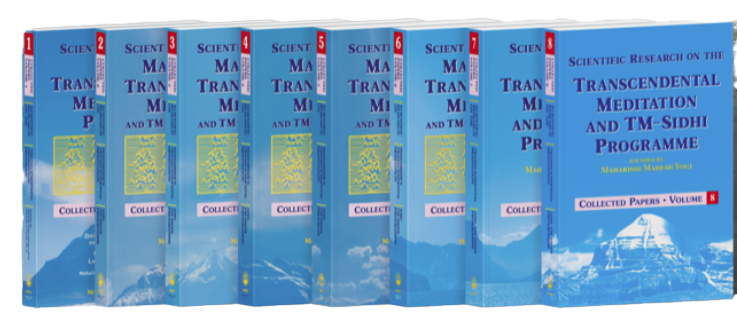
6 papers found
- 2015· BMC Complementary and Alternative Medicine· EmpiricalLeach, Matthew J.; Francis, Andrew; Ziaian, Tahereh (2015). Transcendental Meditation for the improvement of health and wellbeing in community-dwelling dementia caregivers [TRANSCENDENT]: a randomised wait-list controlled trial. BMC Complementary and Alternative Medicine, 15, 145.
Twelve-week pilot randomized wait-list controlled trial in 17 dementia caregivers. Response speed improved relative to control, while other between-group outcomes were nonsignificant. The small trial was underpowered for firm efficacy conclusions.
- Cognitive Performance: Response speed improved relative to the wait-list control (p = .03).
- Psychological Health: Other primary and secondary between-group changes, including wellbeing measures, were not statistically significant.
- Health—General: Adverse events were reported by 63% of TM-treated participants, generally transient and mild to moderate, and only possibly related to treatment.
- 2001· Physiology & Behavior· Empirical· Collected Papers Vol. 7Infante, Jose Rafael; Torres-Avisbal, Miguel; Pinel, Pilar; Vallejo, Juan Antonio; Peran, Fernando; Gonzalez, Francisco; Contreras, Pablo; Pacheco, Carmen; Roldan, Ana; and Latrea, Jose Maria. Catecholamine levels in practitioners of the Transcendental Meditation technique. Physiology & Behavior 72: 141–146, 2001.
Individuals participating in the Transcendental Meditation program, and in some cases the advanced TM-Sidhi program, displayed in contrast to control subjects significantly lower morning and evening levels of norepinephrine and morning levels of epinephrine. Also in contrast to controls, the morning and evening levels of both norepinephrine and epinephrine were comparable among those participating in the Transcendental Meditation program, indicating absence of a typical diurnal rhythm. The authors suggest that the results may be due to lower hormone response to daily stress and lower sympathetic nervous system tone among the Transcendental Meditation program group.
- Biochemical: Biochemical Indications of Decreased Stress (Lower Morning Levels of Norepinephrine and Epinephrine, Lower Evening Level of Norepinephrine)
- 1998· Physiology & Behavior· Empirical· Collected Papers Vol. 7Infante, J. R.; Peran, F.; Martinez, M.; Roldan, A.; Poyatos, R.; Ruiz, C.; Samaniego, F.; and Garrido, F. ACTH and ß-endorphin in Transcendental Meditation. Physiology & Behavior 64: 311–315, 1998.
Individuals participating in the Transcendental Meditation program showed no diurnal rhythm of adrenocorticotrophic hormone (ACTH) or β-Endorphin, in contrast to control subjects, who showed the normal diurnal rhythm. That is, subjects regularly practicing the Transcendental Meditation technique had significantly lower morning values of ACTH and β-Endorphin than controls; the afternoon values of both groups were comparable, and for the Transcendental Meditation program group, comparable to the morning values. The authors conclude that the Transcendental Meditation program has a significant effect on hormones through modulation of the neuroendocrine axis, perhaps through a change in feedback sensitivity.
- Biochemical: Biochemical Indications of Decreased Stress (Lower Morning Levels of ACTH and Beta-endorphin)
- 1994· European Journal of Endocrinology· Empirical· Collected Papers Vol. 6Infante, J. R.; Samaniego, F.; Martinez, M.; Roldan, A.; Hortas, M.; Lopez, E.; Castejon, J.; Poyatos, R.; and Peran, F. Circadian rhythm alteration by a mental technique for stress reduction. European Journal of Endocrinology 130, Supplement 2: 122, 1994. Paper presented at IIIrd European Congress of Endocrinology, Amsterdam, The Netherlands, July 1994.
This study found that participants in the Transcendental Meditation program displayed a different daily biochemical rhythm than controls, measured by lower morning levels of ACTH and beta-endorphins, which may be associated with decreased stress.
- Biochemical: Lower Morning Levels of ACTH and Beta-endorphins
- 1983· Empirical· Collected Papers Vol. 5Walton, K. G.; Francis, D.; Lerom, M.; and Tourenne, C. Behaviorally-induced alterations in human urinary 5-hydroxyindoles. Transactions of the American Society for Neurochemistry 14: 199, 1983.
Length of time spent in the daily practice of the Transcendental Meditation and TM-Sidhi program influenced the daily rhythms of the serotonin metabolite 5-HIAA and similar substances. Since serotonin is important in physical and mental health, these changes could mediate some of the beneficial effects of the program.
- Biochemical: Change in Daily Cycle of Urinary 5-Hydroxyindoles, Metabolites Related to Serotonin
- 1972· Phi Delta Kappan· Theoretical/Review· Collected Papers Vol. 2Driscoll, F. TM as a secondary school subject. Phi Delta Kappan 54(4): 236–237, 1972.
A U.S. public school superintendent outlines his successful experience of introducing Transcendental Meditation into the adult education program of his area and at a senior high school. Improved. grades, improved relationships with family, teachers, and peers, and disappearance of drug abuse are reported.
- Review Paper—Education: Theoretical and Review Paper—Education